Spring Learning Made Easy: Rainbow Trace & Color Worksheet
As a designer and content creator, I am always looking for assets that bridge the gap between professional quality and practical utility. When it comes to early childhood education resources, the Rainbow Trace & Color Worksheet - Spring hits that sweet spot perfectly. It isn’t just a coloring page; it is a carefully designed tool intended to develop fine motor skills and color recognition in young learners. For educators, homeschooling parents, and creative entrepreneurs, this printable offers a high-quality solution that feels both professional and engaging.
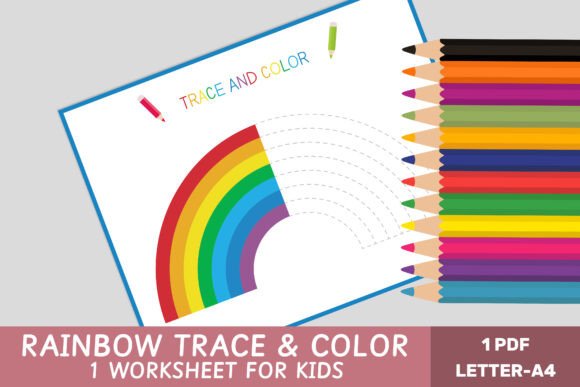
The core appeal of this resource lies in its visual clarity and purposeful layout. The design focuses on bold, distinct lines that guide the hand of a toddler or preschooler without being overly restrictive. This is crucial for early learners who are just developing their pencil grip. The "Spring" theme introduces seasonal joy, but the execution remains clean enough to avoid overwhelming a child’s visual field. It strikes a balance between being a fun activity and a structured learning exercise, making it an essential addition to any preschool center’s toolkit.
Visual Appeal and Design Characteristics
From a visual perspective, the Rainbow Trace & Color Worksheet utilizes a minimalist approach to maximize engagement. The illustration style is friendly and approachable, using thick, confident strokes that serve as boundaries for tracing. This isn't a complex piece of editorial design; rather, it is a functional design asset where white space and line weight work in harmony. The simplicity ensures that the child focuses on the mechanics of tracing and the selection of colors, rather than getting lost in intricate details they cannot yet process.
The overall personality of the worksheet is cheerful and educational. It avoids the clutter often found in free, low-quality printables found online. By providing a high-quality PDF file, the creator ensures that the lines remain crisp and sharp regardless of the printer used. This attention to technical detail—offering both A4 and Letter sizes—demonstrates a professional understanding of modern typography and layout standards. It proves that even simple educational tools can benefit from thoughtful design, ensuring that the end result looks polished and intentional.
Practical Applications and Versatility
While the primary audience is toddlers and preschoolers, the utility of the Rainbow Trace & Color Worksheet - Spring extends into various professional and personal realms. For small business owners in the education sector, this worksheet is a ready-made content asset. You can incorporate it into a larger curriculum bundle or use it as a standalone freebie to attract parents to your newsletter. It serves as a tangible value-add that showcases your commitment to quality resources.
Furthermore, for content creators and bloggers focusing on parenting or homeschooling, this resource is perfect for download libraries. It adds functional value to your blog posts without requiring you to commission custom illustrations. Here are a few practical ways to leverage this design asset:
- Classroom Centers: Laminate the sheets for reusable dry-erase practice, or print multiple copies for group activities focusing on color theory.
- Occupational Therapy: Use the structured tracing lines to help children with developmental delays practice hand-eye coordination.
- Brand Building: If you sell educational materials, bundling this worksheet with your products enhances the perceived value of your offering.
- Digital Distribution: Host the PDF on your site to encourage email sign-ups, providing immediate, tangible value to your audience.
Maximizing Quality and Output
The recommendation to print on heavy cardstock is not just a suggestion—it is a design imperative. Standard copy paper often buckles under the pressure of crayons or markers, which can frustrate young artists. By using heavy cardstock, you ensure that the Rainbow Trace & Color Worksheet holds up to the physical demands of the activity. This tactile experience is part of the learning process; the weight of the paper signals that this is a "special" activity, increasing the child's focus and engagement.
When preparing your files for print, treat the PDF with the same respect you would a piece of logo design or packaging design. Adjust your printer settings to "High Quality" or "Best" to ensure the black lines are dense and opaque. If you are running a daycare or a creative workshop, consistency matters. Printing a batch of these worksheets on uniform cardstock creates a cohesive, professional environment. It shows that you value the materials you provide, a subtle but powerful signal to parents and clients.
Integrating into a Creative Workflow
For the creative professionals reading this, think of the Rainbow Trace & Color Worksheet - Spring as a modular component. In the world of editorial design, we often look for assets that complement our layout without dominating it. This worksheet works similarly in an educational context. It pairs well with other sensory activities or story-time sessions about weather and seasons.
Consider how this tool influences the "user experience" of learning. Just as we analyze readability and visual hierarchy in web design, this worksheet guides the child’s eye from the tracing path to the coloring area. It is a physical manifestation of good UX design. By providing clear instructions and a structured format, you reduce cognitive load for the child, allowing them to focus on the joy of creation. This is a prime example of how thoughtful design—whether for a website or a worksheet—can facilitate a better interaction between the user and the product.